Tuesday, January 5, 2021

Pettus Phillips 1762-1821 My 4th Great Grandfather on my Father's Side

A tobacco field near Baskerville
where I belive Pettus Phillips lived
Like his father-in-law Cluverius Coleman, Pettus Phillip’s name combines his mother’s maiden name
with his father’s surname. Pettus was the son of Martin Phillips and Anne Pettus. He was born in Caroline County, Virginia on October 8, 1762. This date was recorded in his son’s family bible. Caroline County is in Eastern Virginia bounded by the Rappahannock River. The county was formed from portions of Essex, King and Queen, and King William Counties in 1728 – long before the American Revolution.

Pettus was the fifth child born to Martin and Anne. He had three older sisters Mary, Nancy and Sarah and one younger sister, Elizabeth. Plus one older brother Dabney and a younger brother William. I don’t yet have exact birth dates for Phillip’s siblings but believe they were all born between 1752 and 1768.

In 1765, when Pettus was three, his father acquired 200 acres in Mecklenburg County and moved the family south where he continued to expand his holding with several more land purchases.

At nineteen Pettus was appointed to serve as a juror in Mecklenburg during the fourth quarter of 1782. At twenty he was one of the delegates supporting Samuel Goode to represent Mecklenburg County. He was also a delegate for Col. Lewis Burwell. Given his young age, I suspect his elevated stature in the community was based in part on his father’s status.

Marriage document for Pettus and Rebecca

On September 4, 1784, Pettus was a witness to a land transaction executed by Cluverius Coleman. Less than four years later Pettus married Coleman’s daughter Rebecca. Their marriage bonds were dated March 6, 1788, so they would have married a few days after that in Mecklenburg. None of the records I have found so far include clues about where in Mecklenburg Pettus and Rebecca lived. His father owned land along the Reedy Branch – a stream that runs between Baskerville and Antler. It is very likely that Pettus lived in the same vicinity, east of Boydton.

Pettus and Rebecca had at least three children who were named in his will. They were Sally Coleman Phillips, my third great grandmother, John Cluverius Phillips and Nancy Pettus Phillips. In his will Pettus left half of his property to his wife Rebecca and the other half to his son John. Upon Rebecca’s death, John was to receive her half of the land. Pettus also stipulated that Rebecca should receive eleven Negroes, and as much furniture, livestock, and utensils she would need to operate the plantation. The word “plantation” indicates that he owned more than 1000 acres at the time of his death. Given that he was in Mecklenburg and that he owned several slaves, it is reasonable to assume that he grew tobacco.

The red highlight shows the location of
Caroline County where Pettus was born

His daughter Sally received one Negro and $400 and daughter Nancy received the same amount. Everything he left to Rebecca and the rest of his estate were to be equally divided among his three children when she died. Pettus’s will was witnessed by Edward Delany, Wright King and a Pettus Phillips, Jr. His son John Phillips was his executor. Pettus Phillips, Jr. was probably a nephew though I have yet to pin down this relationship.

Pettus signed his will on April 15, 1821, and it was recorded on May 21st of the same year so Pettus probably died between those two dates.


This is the first part of the will of Pettus Phillips

Sources for this Post: Marriage document, the Will and another probate document, The Land Family by Samuel B. Land researched by Katherine B. Elliott, Mecklenburg deeds, Revolutionary War Records by K. Elliott, Mecklenburg County Deeds by TCL Genealogy, Marriage Records of Mecklenburg by K. Elliott, Early Settlers of Mecklenburg by K. Elliott, Will Book 9 for Mecklenburg, Melba Crosse's Pattillo book, Rootsweb, FamilySerach, and Ancestry.com

Saturday, December 26, 2020

Lottie's Photos: Christmas 1939


Back: Lewis, John and Emma
Front: Anna, Mom, Marge and Bert
It’s Boxing Day – the day after Christmas and I feel a sense of relief. Celebrating Christmas in our family was a double-whammy because my mother Lottie was born on Christmas day in 1919. So, there was always a lot of excitement and later a lot of pressure to make it extra special for everyone but especially for my mother. For many years I've felt a tremendous sense of relief when Christmas, and all its preparations, was over. 

This photo was taken the first Christmas after my parents were married and long before I was born. I like this photo because it shows all four of my grandparents and my only aunt and uncle. I have that necklace that mom is wearing in this photo. It opens to reveal a photo of Mom and Dad.


That year Mom and Dad hosted the family on Christmas Eve. Everyone arrived at 6 PM and they served Tom and Jerry’s. Then they opened their packages. Our family always opened gifts on Christmas eve which I thought was great – one less day to wait. Mom wrote, “They went home about 11 PM. I was tired as heck, but terribly happy.”


The following day Dad went to mass with Mom – something he did on occasion when they were first together. Dinner was at Gramma and Grandpa Thornally’s. Gramma served turkey and carrot pudding. The Pattillo’s spent Christmas at Dad’s cousin Jo’s home in Brentwood but they stopped by on their way home.

Saturday, December 19, 2020

Caspar Stolte 1821-1875 My 2nd Great Grandfather on my Mother's Side

Home of Caspar Stolte
Caspar Arnoldius Aloysius Antonius Stolte was the eldest son of Gottfried Edmund Stolte and Gertrudis Sophia Hohmeister. He was born on February 6, 1821, in the family home at Kehrwieder 1057 in Hildesheim, Germany. He had two brothers Anton and Fredrick and three sisters Marianna, Theresia and Josephina. His long name comes from his godparents who were present at his birth — so the name Caspar was after Caspar Müller and Arnoldius was after Arnoldius Becker. I don’t yet know how these two men are connected to our family, but it is very likely that they are relatives of some sort. There were two other men present, Henrius Coffa and Henrius Ohlenrozt. It is not apparent from Caspar’s birth record where the names Aloysius or Antonius came from. So far, none of these four names have appeared in other records. 

Caspar was baptized by Pastor Brandeis on February 11, 1821, at St. Godehard’s Catholic Church. He likely attended school for a few years and then entered an apprenticeship program to become a bottchermeister, or cooper master, which means he learned to make barrels and kegs. That is the occupation recorded in my great grandfather’s journal and what is shown on the birth records of Caspar’s children. This is how he made his living and supported his large family.

Historic map showing the location of
Hildesheim in relation to Achtum and Einum

When he was 26, Caspar married Louisa Brönneke, on July 18, 1847, in St. Godehard’s Basilica. The wedding ceremony would have been a grand affair inside the spectacular cathedral. Imagine walking down a long aisle between massive columns as family and friends watched from the pews, then standing beneath a giant circular gilded chandelier to profess your vows.  Caspar and Louisa had twelve children, of which nine survived.


Caspar was the eldest son of Gottfried and Gertrudis, he was able to buy the family home when his parents were ready to sell it. Traditionally, the workshop for his barrel making business would have been on the ground floor of the home and the living quarters on the upper floors. The home at Kehrwieder 1057 was still standing in 2020 and in active use. The street address has been changed to Kehrwieder 37, and what had been the workshop has been converted to a café.

Original birth record in German for Caspar Stolte

Caspar died from tuberculosis on his birthday in 1875 at the age of 54, and was buried in Hildesheim two days later. Pastor Kruger officiated at his funeral service. Unfortunately, graves are re-used in Germany every few years, so unless someone is notable or wealthy it is very unlikely that a grave could ever be found for Caspar or any of our German ancestors.

Death record for Caspar Stolte in German

Interior of Caspar Stolte's home. Photo taken by Thomas Henze
in 2019.

Sources for this Post: My great grandfather's journal, Birth, marriage and death records for Caspar and for his children. Information provided by Thomas Henze, and FamilySearch website.

Wednesday, December 2, 2020

Louisa Brönneke 1828–1893 My Second Great Grandmother on My Mother’s Side

A historic home in Hildesheim, Germany
Louisa’s full name was Louisa Sophia Magdalena Brönneke. She was the daughter of Heinrich Brönneke and Gertrude Budde. Louisa was born on April 18, 1828, at house number 841 in Hildesheim. She was baptized two days later by Pastor Brandeis, the same church official who baptized her future husband. She had three godmothers present at her birth: Louisa Bogershausen, Sophia Budde and Magdelena Brönneke. These are the sources of Louisa’s full name.

Hildesheim where Louisa was born and where she and her husband lived and raised their children is one of the largest cities in Germany. It is located in a valley 24 miles southeast of Hanover, on the banks of the Innerste River, a small tributary of the Leine River, and is surrounded by hills.


Historically, Hildesheim was known as the cradle of art. Today, Hildesheim is one of the most important places for Romanesque art in Germany. One of the most important historic buildings is St. Godehard’s Basilica, which was originally constructed between 1133 and 1172. The building was restored between 1848 and 1863 and is considered one of the finest Romanesque buildings in the world. Another is St. Michael’s Protestant Church which was built by Bishop Bernward. Both of these buildings are designated World Heritage Sites.

The original birth record for Louisa that Thomas Henze
found and sent to me.

Hildesheim is a quaint and picturesque town with many very old homes. A large percentage of these buildings and homes were either destroyed or damaged during the last two months of World War II, but many have been restored or reconstructed to match the original design.

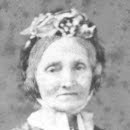
This portrait was among my grandmother's things.
I think it is a photo of her grandmother but
I am not certain. If anyone recognizes this photo
and can tell me who it is please contact me.

Louisa was nineteen when she married Caspar and twenty when their first son, Friedrich Joseph, was born. Her second child, another son, died just six days after his birth. Her fourth child and first girl was my great grandmother Gertrude Elizabeth Stolte, who was born in 1853. Louisa continued to give birth every couple of years until she was 41 years old. Sadly, of her last two children, one died at five months and the last died at birth. Then her husband Caspar died five years after their last child was born, and Louisa was left a widow at the age of 46. Here is a list of Casper and Louisa’s twelve children.

Louisa's baptism record in German found by Thomas

Friedrich Joseph Stolte born August 14, 1848

Friedrich Carl Heinrich Stolte born March 6, 1851, and died March 12, 1851

Friedrich Heinrich Stolte born March 4, 1852.

Gertrude Elisabeth Stolte (my great grandmother) born October 21, 1853

Johanna Maria Stolte born October 23, 1855

Heinrich Wilhelm Stolte born February 15, 1858

Gertrude Stolte born January 10, 1860

Magdelena Stolte born November 24, 1861

Carl Heinrich Stolte born July 1, 1863

Maria Gertrude Stolte born October 30, 1866.

Georg Friedrick Stolte born on February 8, 1868. King George V was listed on his birth record as the godfather. Unfortunately, George died on July 25th of the same year.

Their twelfth and last child died at birth on March 31, 1870. 

Interior of the Basilica of St. Godehard's 
where Louisa was baptized and married.

Somehow Louise managed to survive after her husband’s death and raise their children. She died on September 15, 1893, at the age of 65. She too was buried in Hildesheim, probably with her husband and the children who had died before her.


Sources for this post: Birth, baptism and marriage records found by Thomas Henze, FamilySearch website, and my great grandfather's personal journal.

Thursday, November 26, 2020

Lottie's Photos: Thanksgiving Gatherings


Our family gathered on Louis and Anna's front porch.

While I was growing up the tradition in our family was that Mom and Aunt Marge shared responsibility for hosting Thanksgiving dinner, and whoever did not host would then be responsible for hosting that year’s Christmas dinner. It worked out well for decades. Both celebrations always included three generations of our combined families. Occasionally, someone would be added like Marge’s parents or a current boyfriend.

From reading mom’s diaries, I learned that when she was a girl, she and her parents typically had Thanksgiving dinner with Gramma’s brother’s family Henry Menge, so mom was with a gaggle of her female cousins. In 1933 they all went to Henry’s cabin in Ben Lomond for Thanksgiving dinner. They were with the Menges again in 1936. That year mom and her cousins strategized about how to convince Martin McTigue to take mom to the senior ball.

Dinner was at the Menges again in 1938 but by then Mom had met Dad so after dinner the two of them went to San Francisco with some friends. Anna and Louis hosted in 1939 and included Emma and John Thornally at their table since Mom and Dad were engaged to be married by then.

1940 was the first time Mom hosted Thanksgiving dinner. She planned it well ahead because on November 13th she wrote that she had asked her mother to help her prepare the meal. Afterward, she noted that dinner was fine. The following year Marge offered to host the combined family at her parent’s home and she asked everyone to contribute $2 towards the meal. In 1942 Anna Pattillo hosted. Emma Thornally had the honor in 1944 and served a roast chicken!

The last diary entry about Thanksgiving was for 1946. That year Marge offered again to host at her family home but the ante was only $1. Despite the reduced charge, Mom was fed up and refused to attend, and instead she decided to host her own dinner and invited the Pattillos who declined saying they felt they should accept the earlier invitation from Marge.

I started hosting Thanksgiving dinner at my home in 1977.

Wednesday, November 18, 2020

Cluvarius Coleman 1740 - 1799 My 5th Great Grandfather on my Father's Side


Abington Church in Glouster, Virginia where
Cluverius was born
Cluverius Coleman was my 5th great grandfather on my paternal line. He had a role in the American Revolution. He was born in Abingdon Parish which is in Glouster County Virginia. His parents were Joseph Coleman and Grace Cluverius so it is clear where his unusual name came from. Cluverius had five siblings – two brothers Thomas and Samuel and three sisters Elizabeth, Rebecca and Sarah. Glouster County was formed in 1651 and was a major tobacco growing area.

By 1760 Cluverius had relocated to Mecklenburg County where many of our Pattillo ancestors lived. Cluverius married Elizabeth Massey in Mecklenburg that year. They had nine children – four boys and five girls including my 4th great grandmother Rebecca Coleman.

In 1775 Cluverius had a key role in the start of the American Revolution. He along with twenty other representatives met on the eighth and thirteenth of May to “secure a due observation of the association entered into by the Continental Congress”[1] They went on record stating that Lord Dunmore’s actions were alarming in response to his having declared Patrick Henry an outlaw. Patrick Henry and his body of militiamen objected to Dunmore having removed the gunpowder from the public magazine in Williamsburg. “Taking a dramatic step ….. each member of the committee was implored to exert his endeavors to enlist volunteer soldiers for defensive rather than offensive purposes”.[2] This led us one step closer to the American Revolution.

On October 13, 1777 Cluverius, along with five other men, was appointed as a Gentleman Justice for the county.[3] His term was renewed in September of 1778. Cluverius and his fellow jurists were charged with administering loyalty oaths from the citizens of Mecklenburg. The objective was to “dispel or at least render harmless potential enemies of the cause.”[4] Some who were unwilling to sign the oath were asked to leave.

Records show that on at least three occasions in 1776 and 1777 Cluverius was listed on polls taken to determine delegates for Mecklenburg County. Between 1777 and 1779 he witnessed three different deeds that were recorded in Deed Book 5 for Mecklenburg County.

In September of 1778, Justices in Mecklenburg ordered a man named John Cardin to appear in court and answer a charge of “speaking disrespectfully of the measures of this Commonwealth …” Cardin was found guilty, fined five pounds and spent two days in jail. Then in October of 1777, “Leonard Cardin was accused, apparently by Cluverious Coleman, of “harboring two deserters from the militia in the southern service.”[5]


Diagram from Katherine Elliot book of Mecklenburg
County showing the Buckhorn District that Cluverius
collected names of residents

Land Acquisitions

Between 1771 and 1797 Cluverius purchased twelve tracts of land and only sold one parcel as far as I can determine from studying the deed books for Lunenburg and Mecklenburg Counties. His first purchase, at the age of 21, was a 285-acre parcel in Lunenburg County located on the Meherrin River. Six of the deeds noted that he bought land on the Meherrin River. Most were on the south fork of the Meherrin and most of those were on the south side of the south fork but one was on the north side of the south fork. Other parcels were located on Buckhorn Creek, Laton Creek and Allen Creek. All of these parcels were located generally northeast of the town of Chase City which is very close to the town of Boydton – the county seat and the place where our Pattillo ancestors lived for four generations. You may ask how can parcels in two different counties be located in the same place? The answer is because in 1771 what is now Mecklenburg was a part of Lunenburg County. Mecklenburg was carved out of Lunenburg in 1765.

1870 Map of Mecklenburg Co. from the Library of Congress.
The Buckhorn District is the gray section on the top of the map
The purchases varied in size from a one-acre parcel that he bought from Anthony Street for 15 shillings to a 370 acre parcel he acquired in 1774 from Joseph Turner. In total he owned at least 1877 acres. That amount of land constitutes a plantation whereas total acreage of less 500 acres would have been considered a farm. His will noted that Cluverius grew tobacco on his plantation.

Two parcels were mentioned in his will when he left them to his son Thomas. Of those one had a mill on it. 

Census Enumerator

In May of 1782, Cluvarius was one of eight men who were appointed to record the number of tithables in Mecklenburg County which meant males sixteen years of age or older including slaves. This data has been used in place of the first US census taken in 1790 because the census was destroyed during the war of 1812. The district that Cluvarius counted was in the northern part of the county bordering Lunenburg County.

This is the list of names collected by Cluverius that were
published in lieu of the 1790 census which was destroyed.
In October of 1787, Cluverius was involved with an unusual and interesting court case. He submitted an application to be compensated for a slave he owned that had been falsely convicted of burning a barn owned by a man named John Thompson. The record of this case, dated October 24th noted that it included condemnation, a valuation and a certificate. Likely this was the same Mr. Thompson who was his neighbor on Buckhorn Creek.

One month later Cluvarius was engaged in another court transaction when he was named as the guardian of Elizabeth, Jane and Benjamin Coleman who were three of the four children of Cluvarius’s son James Coleman. It is likely that James’s wife, Sarah Whitehouse was still living but it was customary at that time for a man to be appointed as the guardian. The children would have continued to live with their mother but their grandfather was made responsible for their well-being until they came of age.

Will of Cluverius Coleman

On September 14, 1799 Cluverius signed his will. He was fifty-nine years old at the time and living in St. James Parish of Mecklenburg County. In his will he left his wife Massey the land they were living on and five slaves named Anthony, Bob, Primus, Hanna and Amey. In addition, she was to receive six choice head of cattle, one yoke (that’s two) of oxen, one ox cart, ten head of sheep, fifteen head of hogs, thee choice work horses, three choice featherbeds and furniture. He also left Massey his desk and a bookcase, one dozen setting chairs, two choice tables, and such household and kitchen furniture as she may stand in need of. His will stipulated that she should be given sufficient plantation utensils for her use and the crop of corn and tobacco growing on his plantation.

A clip from our family tree showing how Cluverius is
related to James William Pattillo, our great grandfather.
He left each of his son James Coleman’s children five pounds cash which was to be distributed to them when they came of age. That is the equivalent of $140 in 2020. His daughter Elizabeth Coleman Jeffries received one slave named Phebe and each of her five children got thirty pounds cash which is comparable to $838 today. The will offers no explanation as to why he gave so much more to Elizabeth’s children. Possibly he had already given James’s children, his three wards, other cash or property.

My fourth great grandmother Rebecca Coleman Phillips received one negro boy named Moses and one negro woman named Jenny and her increase, plus one hundred pounds to her and her heirs.

His daughter Mary Coleman Boswell’s five children received one negro woman named Abbe and her increase and thirty-five pounds cash a piece. His daughter Grace Coleman Hicks received one negro boy named Edmund and one negro woman named Rachel and her increase. Grace’s children also received one hundred pounds cash each.

His son John Coleman received one hundred pounds, and two cows and calves for himself and his heirs. Anne Coleman Green received five Negroes named Milly, Aggy, Jude, Mike and Sam, as well as a young unbroken mare of her choice, and two cows and calves for her heirs. Anne and each of her children received two hundred pounds.

Son William Coleman got the tract of land that Cluverius had purchased from Nevin Stewart and the tract he bought from John and David Holmes which he estimated contained 313 ¾ acres. This was the parcel that Cluverius and Elizabeth lived on at the time. William and his heirs also received five hundred pounds apiece.

Finally, his son Thomas Coleman and his heirs got all of his land lying on both sides of the Meherrin River including his mill. Anything not otherwise stipulated was to be equally divided between his sons William and Thomas, and upon his wife’s death they were to received everything that he had left to her. He also appointed his sons William and Thomas as his executors.

The will was signed by Cluverius and witnessed by John and Matthew Allen. It was proved in the Mecklenburg County Court in October of 1799. One month later Cluverius died in Mecklenburg County on October 14, 1799.

So, Cluvarius left his children and their heirs between five and five hundred pounds each that’s $140 to $14,000. Why the discrepancy? I don’t think we will ever know. From my experience in reading historic wills I would say that it is more typical that parents tried to provide a more equitable distribution except sons typically received more than daughters.

Map of the area of Mecklenburg where Cluverius owned land.
The black arrows point to the Meherrin River, the South fork,
Buckhorn Creek and the small creek at the top right may
be the Bare Branch.


[1] Bracey, Susan L., Life by the Roaring Roanoke: A History of Mecklenburg County, VA, 1977, p. 64.

[2] Ibid p. 64

[3] Nettie Leitch Major, Revolutionary Service in Mecklenburg Co. Virginia Genealogical Society Quarterly 1982.

[4] Bracey p. 92.

[5] Ibid p. 94

Thursday, October 29, 2020

Lottie's Photos: The Van-Tillo Ally Painters, 1947


Mom, Dad and Terry with John Thornally and Clara
and Floyd VanEpps and their son.
Wherever Mom and Dad lived they made friends with their neighbors and kept those friends for the rest of their lives. This pattern began with Harold and Mickey Mohr and when they bought their first home on Elsie Avenue in San Leandro, they met and befriended Clara and Floyd VanEpps.

Mom and dad socialized with Clara and Floyd and they spent time entertaining each other in their homes. Mom and Dad went to the VanEpps one Thanksgiving, the following year they spent New Years Eve together. They went dancing at the German Club and the Alta Mira Club. In August of 1944 they all went to see a musical at Woodminster. Occasionally, they would watch each other’s children and when Dad went to the hospital to bring Kathy home after she was born Clara rode along with Dad and held Kathy on the way back.

This photo was taken over the 4th of July weekend when the two families worked together to paint one of their home. The following weekend they painted the other. Grandpa Thornally, sitting in the middle with his pipe and a hat on washed all the brushes and helped clean up each day. Looks like even Terry and the VanEpps’s son helped as well.